


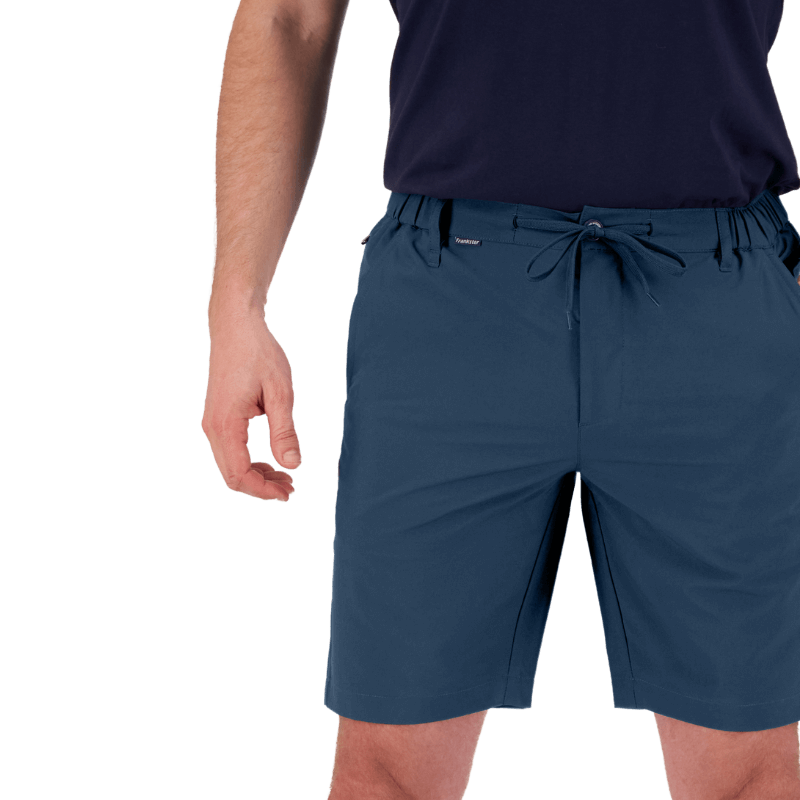

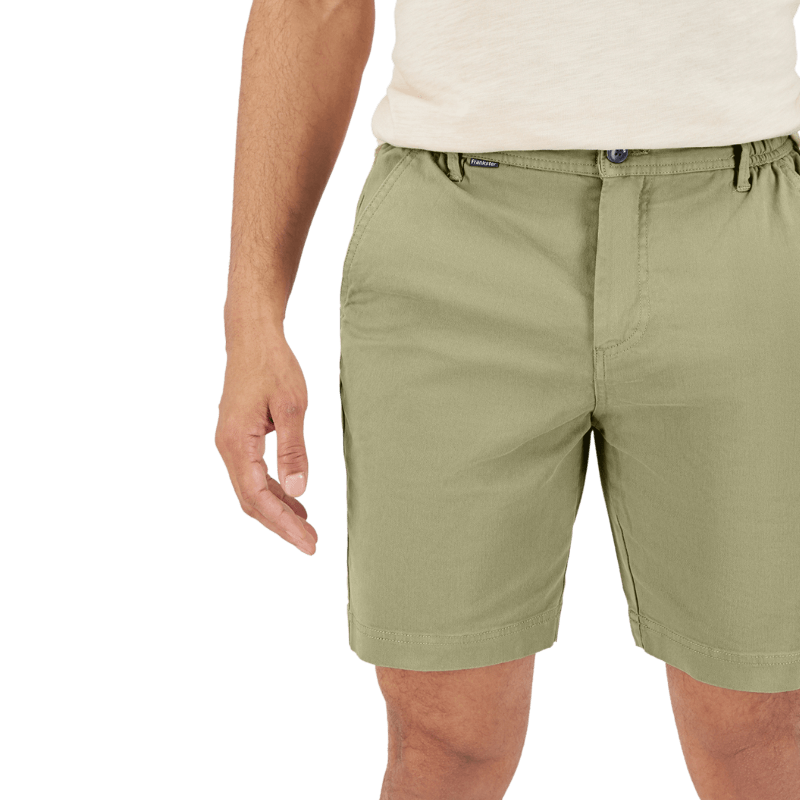

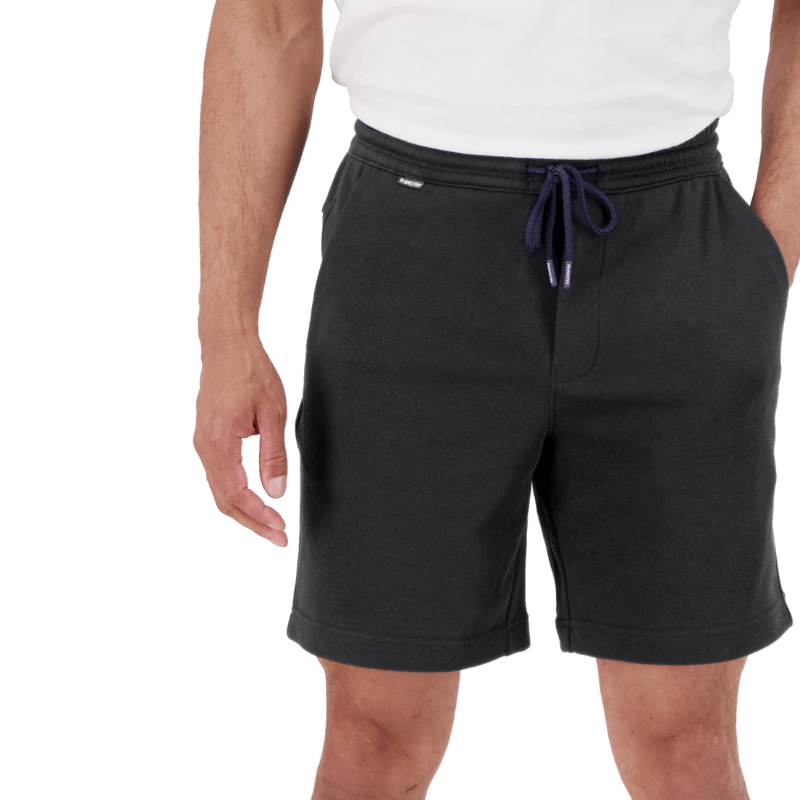

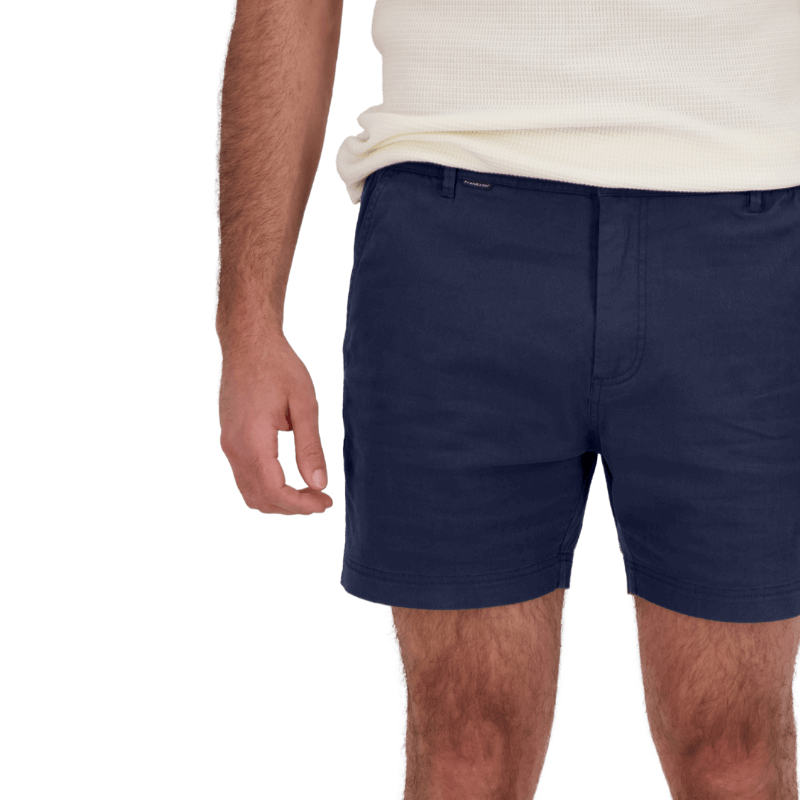




There are few things less appealing than a pair of shorts that looks right at breakfast but feels entirely wrong by lunchtime. In summer, fabric matters: it affects airflow, moisture absorption, drying time, comfort and how polished your outfit remains throughout the day.
The debate around mens shorts cotton or polyester is not as simple as choosing one fibre over the other. Cotton and polyester behave differently, but the weight, weave, fit, finish and amount of stretch also make a noticeable difference. The right choice depends on what your day involves.
How Cotton Behaves on a Hot Day
Cotton is popular for summer because it feels soft against the skin and works easily with casual shirts, polos and sneakers. It also has a more familiar, matte appearance than many technical fabrics.
The main drawback is moisture. Cotton absorbs sweat, so it can remain damp after a long walk, a humid commute or an active afternoon. That may not matter for a relaxed day, but it can become uncomfortable around the waistband, seat and thighs.
Cotton is usually the better choice for:
- Everyday summer wear.
- Weekends and casual lunches.
- Sightseeing at a relaxed pace.
- Men who prefer a natural hand feel.
- Outfits that need to look casual rather than sporty.
So, are cotton shorts good for men in summer? Absolutely—particularly for low- to moderate-intensity days. They are comfortable, versatile and easy to dress up or down. A small amount of elastane can also improve comfort by allowing the shorts to move with you.
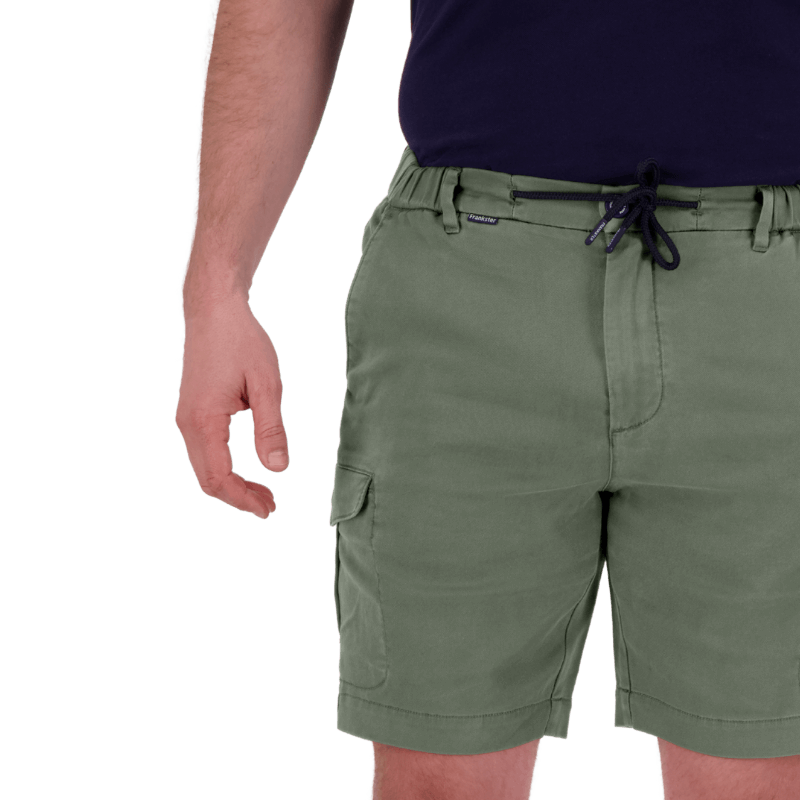
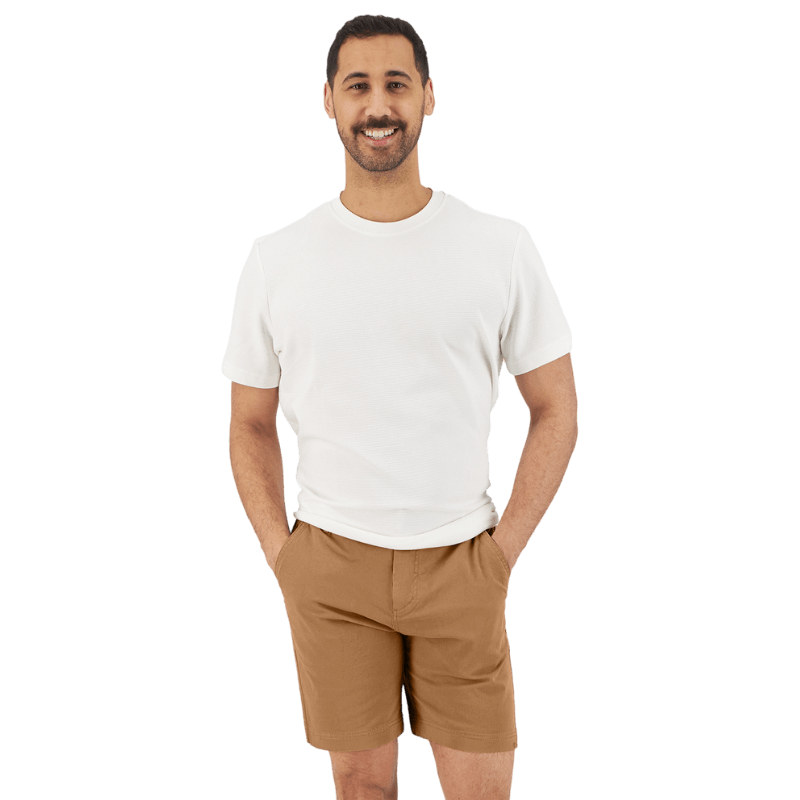
Frankster’s Cotton Shorts include stretch-cotton styles such as The Shorties, made from 98% cotton and 2% elastane. This keeps the feel and appearance of cotton while adding a little more ease through the seat and thighs.

How Polyester Behaves on a Hot Day
Polyester absorbs very little moisture compared with cotton. As a result, lightweight polyester shorts will usually dry faster after sweat, rain or washing.
That makes polyester useful for:
- Golf and hiking.
- Long walks.
- Humid weather.
- Active commutes.
- Travel with limited laundry access.
- Days when shorts need to be packed and worn with minimal creasing.
That does not mean every polyester short is automatically cool or moisture-wicking. Moisture-wicking depends on the yarn, fabric structure, finish and design. A lightweight polyester fabric with a suitable construction can move moisture across the surface so it evaporates more readily. A dense or poorly ventilated synthetic fabric may still feel hot.
Polyester can also offer useful wrinkle resistance. After being packed in a suitcase or worn during a long journey, lightweight polyester shorts will often look less creased than cotton. The trade-off is a smoother, more technical feel, which may not suit every casual wardrobe.
For performance-focused options, explore Frankster’s Polyester Shorts. The range includes lightweight stretch styles designed with movement, moisture management and water resistance in mind.
Sweat, Drying Time and Odour
One of the biggest differences between men’s cotton shorts vs polyester shorts is how they handle sweat once the temperature rises.
| Situation | Cotton | Polyester |
| Light activity | Soft and comfortable | Dry-feeling and lightweight |
| Heavy sweating | Absorbs moisture and stays damp longer | Usually dries faster |
| Hand washing | Longer drying time | Usually easier to re-wear quickly |
| Repeated sweaty wear | Often less odour retention | Can retain stronger odour |
| Travel | Comfortable but slower to dry | Convenient and crease-resistant |
Polyester’s quick-drying advantage does not mean it is always fresher. Studies have found that polyester can retain odour compounds more readily than cotton, particularly after exercise and repeated wear.
The choice therefore comes down to the problem you want to avoid:
- Choose cotton if you dislike synthetic fabrics and do not expect heavy sweating.
- Choose polyester if damp shorts are your main concern.
- Wash either fabric after heavy exercise rather than relying on quick drying alone.
If your priority is easy packing, faster drying and fewer creases between wears, Frankster’s Travel Shorts are also worth considering for warm-weather trips.

Shrinkage, Washing and How Long Each Pair Lasts
Cotton is generally more vulnerable to shrinkage and dimensional change, particularly when washed or dried at high temperatures. Pre-shrunk cotton can reduce the risk, but it is still best to follow the care label and avoid unnecessarily hot washes or tumble-drying.
For cotton shorts:
- Wash at the recommended temperature.
- Avoid unnecessary high-heat drying.
- Be careful with the first wash.
- Allow the garment to dry naturally where practical.
Polyester is usually more dimensionally stable and less likely to shrink significantly. It is not completely maintenance-free, however. High heat can damage elastane in stretch fabrics, while frequent abrasion may contribute to pilling or a worn surface over time.
Durability depends on the complete garment, not just the fibre. Before buying, look at:
- Crotch and pocket stitching.
- Waistband construction.
- Zip and button quality.
- Fabric thickness.
- Stretch recovery.
A well-made cotton short can outlast a poorly constructed polyester pair. Care, fit and construction all influence how long shorts remain comfortable and presentable.
Cotton vs Polyester Shorts at a Glance
| If you care most about... | Choose | Why |
| Softness | Cotton | Softer, more natural hand feel |
| Casual style | Cotton | Less technical-looking |
| Fast drying | Polyester | Absorbs less moisture |
| Active use | Polyester | Better suited to sweat and movement |
| Minimal creasing | Polyester | Packs and travels well |
| Odour after exercise | Cotton, generally | Polyester may retain more odour |
| Stretch | Either with elastane | Check the percentage and recovery |
| Everyday versatility | Cotton | Easy to dress up or down |
| Travel | Polyester or a blend | Dries quickly and resists wrinkles |
Reading the Label: Blends, Stretch and Percentages
The fibre percentage gives you a useful indication of how shorts may feel and perform.
A blend such as 98% cotton and 2% elastane will usually feel and look like cotton. The elastane adds flexibility without changing the casual character of the fabric.
A blend such as 92% polyester and 8% elastane is more movement-focused. It should offer greater stretch and faster drying, although the final result still depends on the fabric’s weight and construction.
Cotton-polyester blends can be a practical compromise:
- Cotton adds softness.
- Polyester improves drying time and wrinkle resistance.
- Elastane adds movement.
- The blend ratio determines which fabric behaviour is more noticeable.
When reading the label, check more than the fibre content:
- Weight: lighter fabrics generally suit hot weather, while heavier fabrics offer more structure.
- Stretch recovery: shorts should return to shape after sitting and moving.
- Care instructions: these reveal how much maintenance the fabric requires.
- Finish: terms such as water-resistant or moisture-wicking describe added performance, not the fibre alone.
Choosing Between Cotton or Polyester Shorts for Men
When choosing cotton or polyester shorts for men, think first about how much heat, movement and moisture the pair will need to handle.
Choose cotton when:
- You want a comfortable everyday pair.
- You prefer natural-feeling fabrics.
- Your day involves light activity.
- You want shorts that work with casual and smart-casual outfits.
- You are not concerned about rapid drying.
Choose polyester when:
- You expect to sweat heavily.
- You are travelling through warm or humid conditions.
- You need shorts to dry quickly.
- You want better wrinkle resistance.
- Your day includes golf, hiking or sustained movement.
Choose a blend when:
- You want cotton comfort with easier care.
- You need moderate stretch.
- You want one pair to cover casual wear and travel.
- You prefer a balance rather than a strongly natural or technical feel.
For lighter options, browse Frankster’s Lightweight Shorts.
So, is cotton or polyester better for men's shorts? Cotton is the better all-round choice for everyday summer dressing. Polyester is better when sweat, activity, quick drying and wrinkle resistance matter more. If you are still undecided, choose based on the day ahead—not simply the name of the fibre.
Which is better for men's shorts, cotton or polyester?
Cotton is generally better for casual comfort and everyday styling. Polyester is usually better for activity, humid weather and faster drying.
Are cotton or polyester shorts cooler in summer?
Neither is automatically cooler. Lightweight construction, airflow and fit matter. Cotton often feels comfortable in dry heat, while breathable polyester can perform better during heavy sweating.
Do polyester shorts dry faster than cotton?
Generally, yes. Polyester absorbs less moisture, so lightweight polyester shorts usually dry faster after sweat, rain or washing.
Which shrinks more, cotton or polyester shorts?
Cotton is generally more likely to shrink, especially when exposed to high heat. Polyester is usually more dimensionally stable.
Are cotton or polyester shorts better for everyday wear?
Cotton is usually the better everyday option because it is soft and easy to style. Polyester is more useful when daily wear includes commuting, travel or physical activity.
Is a cotton-polyester blend better than 100% cotton shorts?
It can be. A blend may combine cotton’s softness with polyester’s faster drying and wrinkle resistance. The best choice depends on the blend ratio, fabric weight and intended use.

 https://frankster.com.au
